
Last updated: 2026-08-16
Jerome Idaho Fence Pros is a fence company serving Jerome and the Magic Valley, and fence staining & sealing is one of the services we build most. This page covers what the work involves here specifically — the ground, the climate, the code, and what it costs — rather than what it involves in general.
What we do on the first visit
The first visit is a measure, not a sales call. We walk the fence line with you, check the grade and how the ground drains, and test how deep the basalt sits — Jerome County is Snake River Plain lava rock capped with three to ten feet of windblown loess, and which of those your posts land in changes the job. We confirm where the property line actually runs, count the gates, and note whether equipment can reach the line. Then you get a written per-foot price with removal and gates as separate lines.
If we think repair is the better spend than replacement, or a different material suits your situation better, we say so on that visit — including when it means the smaller job for us.
What's included
- Assessment of whether the wood is dry enough and clean enough to take coating
- Wash and prep to remove mill glaze, graying, and surface growth
- Repair of loose pickets and fasteners before coating goes on
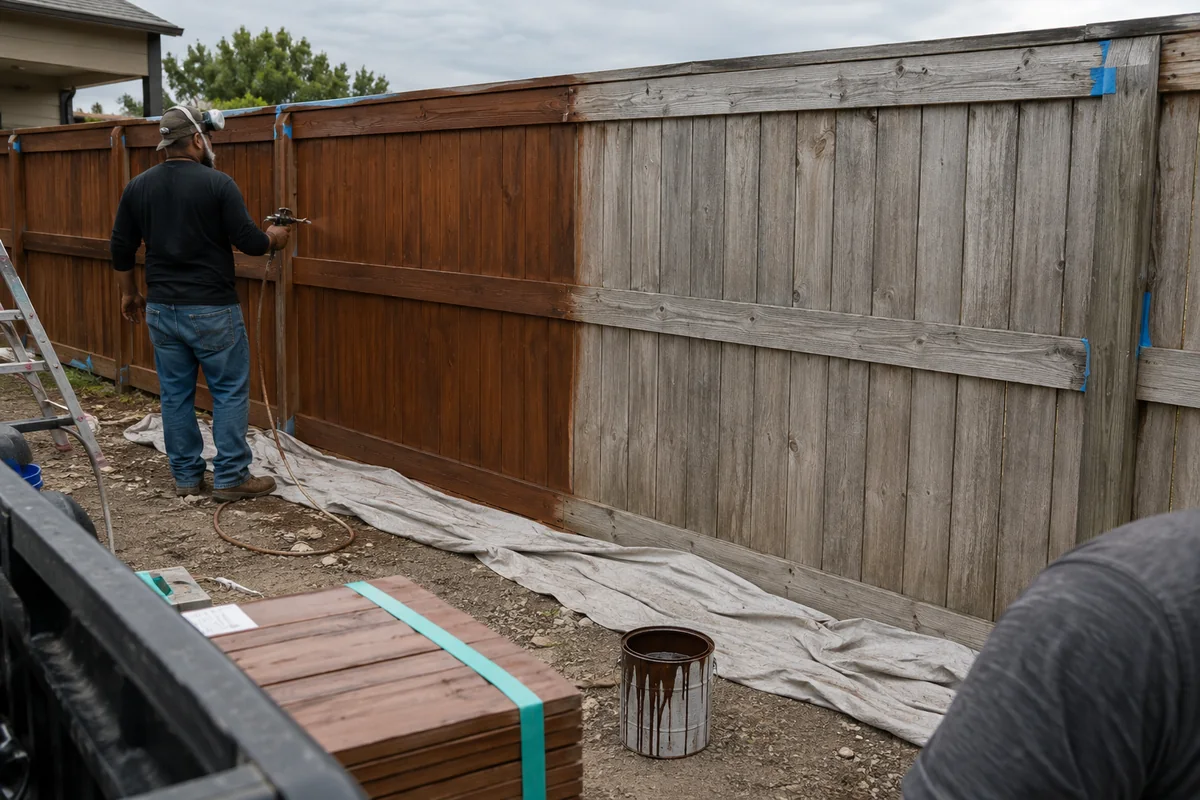
- Penetrating oil or semi-transparent stain with UV inhibitors
- Both faces coated where access allows, not just the street side
- Post bases and end grain given extra attention — that is where water gets in
- Plants, hardscape, and adjacent surfaces masked and protected
- Cleanup and a walkthrough of the finished run
What this costs in Jerome
Fence Staining & Sealing runs $2.5–$6 per linear foot installed in this area. Regional ranges for clean-and-stain on residential wood fence; fence height, condition, and coating type drive the spread. The things that move a job up its range are gate count, how much old fence has to come out, whether we can get equipment to the line, slope, and how shallow the rock is. If you want a number before you call, the fence cost calculator will get you close.
When it needs doing
- Wood grayed on the sun-exposed face
- Water soaking in instead of beading
- Previous coating peeling or flaking
- Surface fiber fuzzy or splintering
Related reading
These go deeper on the questions that come up most on this job: